My AI-designed site was "perfect"—and that was the problem.
With the rise of AI tools, it’s easier than ever to design something technically impressive that completely repels your audience. I recently made this mistake with my own agency’s website. I had a vision: a vaporwave-inspired redesign with neon cyan and yellow on a deep black background.
I sketched it in Figma, fed it to Claude Code’s frontend plugin, and boy, did it cook. It was exactly what I asked for. It was beautiful.
It was also a total disaster.
The “Bubble” Trap
When you’re learning design (like I am) and have powerful AI at your fingertips, you can end up in a vacuum. You think: “It checks all the boxes I’ve learned, so it must be good.”
But I started seeing insights from designers on Threads that stopped me in my tracks. One from @craft_byamina really stuck:
“Premium is predictability.”
I realized I was designing for my own ego, not for the person paying the bills.
The “Puerto Rico” Reality Check
I used those insights to prompt Claude for a “brutal critique” of my new design. The AI’s feedback was a cold shower:
- The Vibe: Neon cyan (#00f0ff) on pure black looks like a Silicon Valley SaaS startup.
- The Audience: My target client is a 50-year-old perito electricista (electrician) in Puerto Rico.
- The Result: The design creates “psychological distance.” He doesn’t want vaporwave; he wants to know he can trust you with his business reputation.
My design was technically “cool,” but it lacked Intention.
Less is More (The Pivot)
I went back to the drawing board in Figma. Instead of “tech-forward,” I aimed for Trust, Professionalism, and Comfort.
- Clean whites and “Trust-building” blues.
- Photos of real local businesses.
- Simple, predictable layouts.
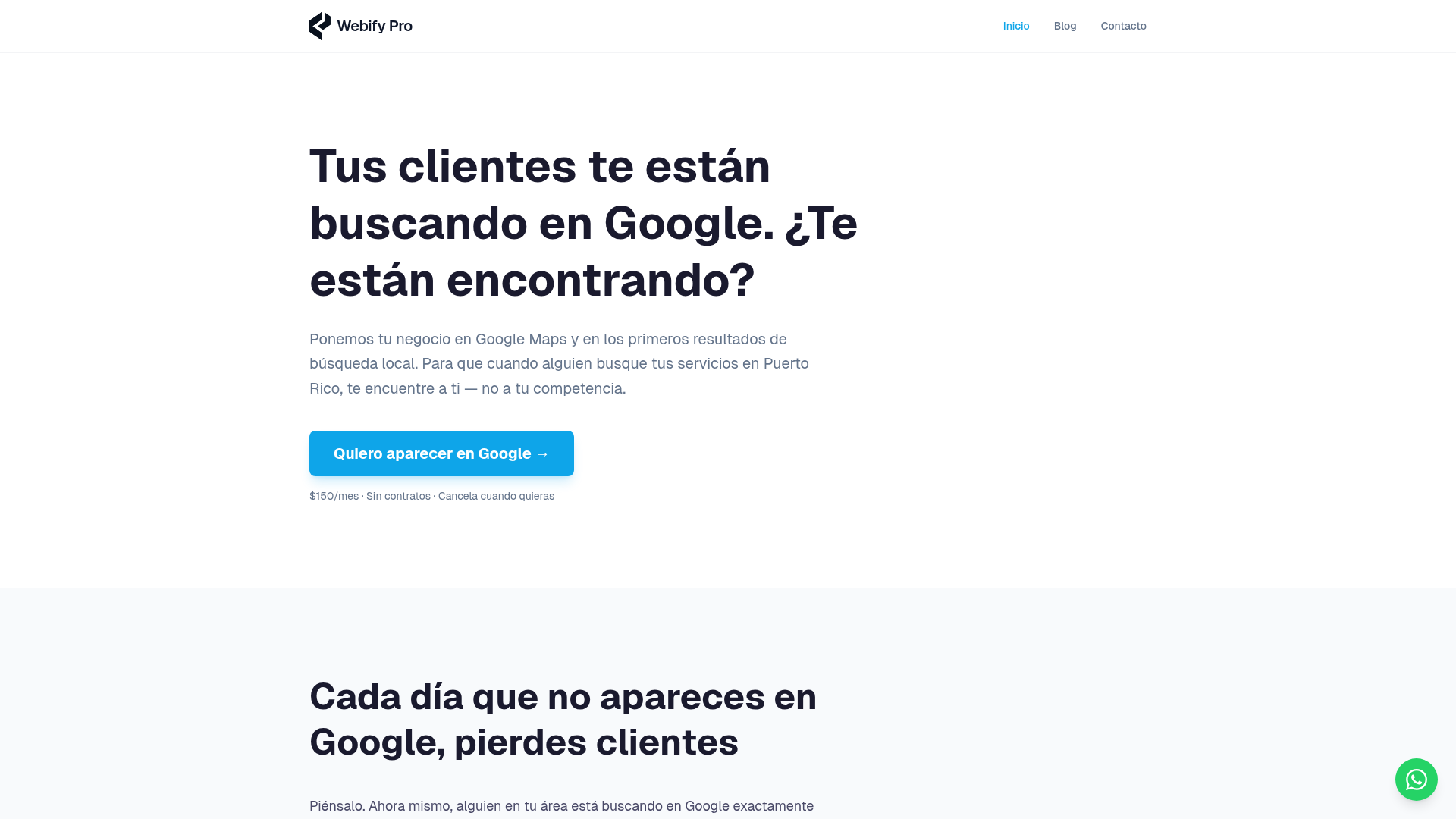
For the first time, the design didn’t just look “good”—it felt intentional.
The Lesson
AI coding tools are incredible, but they are “Yes-Men.” If you ask for a vaporwave masterpiece for a local plumber, they’ll give it to you.
As builders, our job isn’t just to “prompt” the design; it’s to protect the user experience. Even when you’re building with AI, design for the person, not the tool.
What do you think? Have you ever “over-designed” something just because the tech allowed you to? Share your thoughts with me on Threads.